
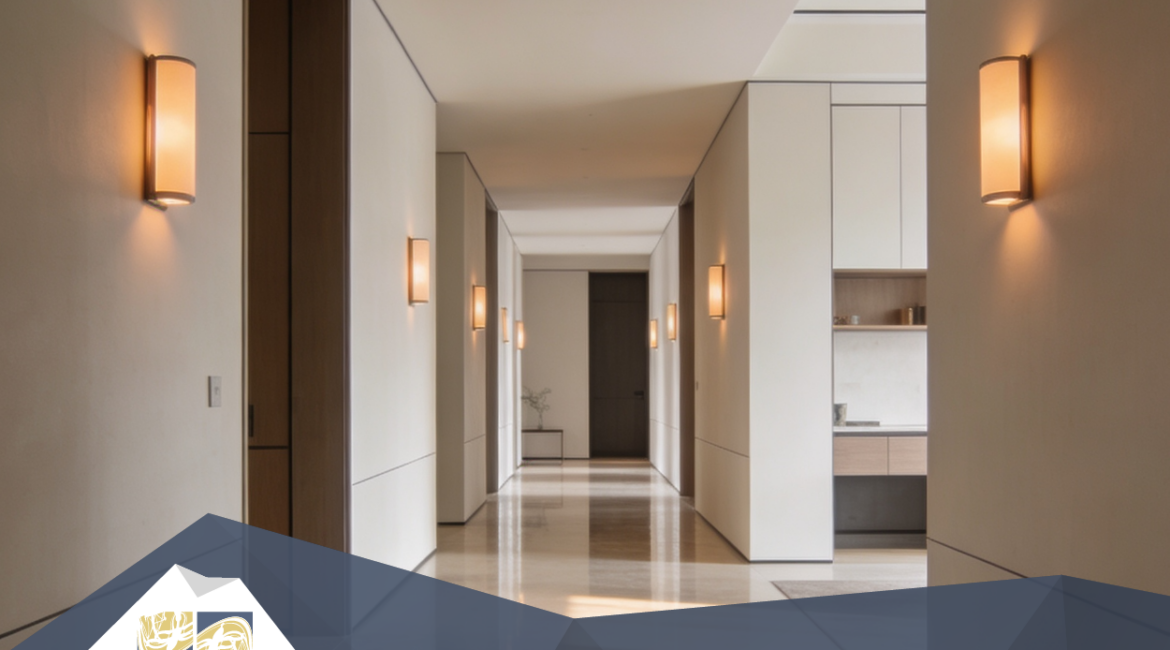
Living in a residential building implies the shared use of certain premises and parts of the building – corridors, stairways, entrances, elevators, basements, attics, and other areas that serve the normal functioning of the building as a whole. Consequently, the legislation of the Republic of North Macedonia establishes clear rules for their use, management, and maintenance.
The legal regime of common areas is primarily regulated by the Law on Housing and the Law on Ownership and Other Real Rights, as well as by bylaws, house rules, and judicial practice.
Pursuant to the Law on Housing, common areas (common premises) include corridors, stairs, attics, basements, waste disposal rooms, drying rooms, laundry rooms, and other parts serving all tenants. Common parts also encompass the roof, facade, elevators, installations, as well as the area surrounding the building – access paths, parking lots, and areas for collective use.
These premises constitute joint and indivisible ownership of all owners of the separate parts (units) within the building. Each owner has the right to use them but simultaneously bears an obligation not to obstruct other tenants and not to impair the function of the building as a whole.
The residential building is managed by the owners through a homeowners’ council (house council) or through an elected manager/administrator. Their task is to ensure regular maintenance, safety, and functionality of the common areas, as well as to enforce the house rules.
The homeowners’ council may adopt rules for the use of common areas, and decisions are made in accordance with statutory majority. The manager, on the other hand, is obliged to act in the interest of all owners and to ensure the unobstructed use of the common parts.
In practice, the most frequent disputes arise regarding the placement of personal belongings in corridors and stairways.
The legal regime of common areas is established to ensure a balance between the right of use and the obligation not to obstruct other tenants. Each case is assessed on its specific merits, and the key question is whether the objects truly constitute a real hindrance or danger.
According to the applicable regulations, objects may be removed if they:
- obstruct movement through corridors or stairways;
- block access to common areas;
- impede the use of emergency exits (evacuation routes);
- pose a fire hazard or a risk of accident;
- contravene the house rules or a decision made by the community of owners.
Hence, it is crucial that there is a real and substantial obstacle, rather than merely dissatisfaction with the presence of objects.
Judicial practice in North Macedonia indicates that courts distinguish between objects that obstruct the use of common areas and objects placed without creating a significant hindrance.
In certain cases, courts have ordered the removal of objects and structures that blocked access to basements, stairways, or other common parts. Conversely, in other matters, claims for removal were dismissed when it was not proven that a substantial obstruction of movement or a danger to tenants existed.
Consequently, the mere presence of a personal object is insufficient; it is necessary to determine whether they truly restrict the normal use of space. Furthermore, the manager does not have an unfettered right to arbitrarily remove private property from common areas without an appropriate decision or legal basis. Typically, a notice or warning is first served to the owner, and if the issue persists, proceedings may be initiated before the competent authorities or a court.
If the objects do not obstruct movement, do not create a risk, and allow for normal passage, yet their removal is requested, tenants have the right to seek a specific justification from the manager or the homeowners’ council regarding any such request for removal.
In such situations, it is useful to:
- document the situation with photographs;
- demonstrate that the passage is clear and safe;
- verify whether a specific prohibition exists within the house rules;
- request a written decision from the community of owners.